
Welcome to the Mathematical World!
Bartholomeo Pitiscus (1561 – 1613)
Pioneer of Trigonometry and Compiler of Mathematical Tables
Pitiscus is best known for formalizing trigonometry as a distinct branch of mathematics and coining the term itself. His work Trigonometria (1595) compiled tables and systematic methods for calculating angles and sides of triangles, essential for astronomy, navigation, and surveying. Using his trigonometric tables, one could compute: \[ \sin \theta, \quad \cos \theta, \quad \tan \theta \] for any given angle, enabling precise determination of distances and positions.
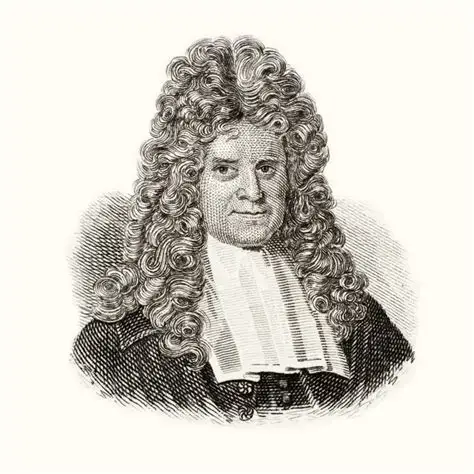
Pitiscus’ methodical approach facilitated accurate calculation of celestial positions and distances, providing crucial tools for explorers and scientists. His work directly influenced Kepler, supplying the mathematical foundation needed to describe elliptical planetary orbits and to perform precise astronomical predictions.
By organizing trigonometry systematically, Pitiscus transformed scattered knowledge into a structured discipline. His contributions highlight the interplay between theory and application, showing how abstract trigonometric principles could solve practical, real-world problems in astronomy, navigation, and engineering.
His emphasis on clarity, standardization, and precision ensured that trigonometry could be reliably applied for centuries, laying the groundwork for future mathematicians and scientists to build upon.
Facts:
- Born in Germany.
- Published Trigonometria in 1595.
- Coined the term “trigonometry.”
- Created accurate trigonometric tables used in astronomy.
- Influenced Kepler’s calculations of planetary motion.

All rights reserved by the Mathematical Unity
Contact: +8801400044645
Email: mathematicalhorse1453@gmail.com
Our Discord Server: Mathematical Unity [Ulus Riyadiyat]